



Kenya’s KES 20,000 to KES 30,000 smartphone bracket has become one of the most active in the market over the past year, with Samsung, Xiaomi, Tecno, and Infinix all launching new models in this range through 2025 and into 2026.
Unlike the sub-KES 20,000 segment, where most smartphones compromise on display and chipset are common, this bracket now offers AMOLED screens, high refresh rates, and multi-year software support as standard rather than an exception.
The options below were all launched within the past two years and remain on sale in Kenya at the time of writing.
How we picked this list
This list is built from two kinds of testing. TWM has directly reviewed two of the phones featured here, the Tecno Spark 40 Pro+ and the Infinix Hot 60 Pro+, spending weeks with each as a daily driver before publishing full verdicts.
The remaining four devices are included based on official specifications, Kenyan retail pricing, and a review of Kenyan and international coverage, cross-checked against launch dates to keep the list to phones released within the past two years.
Samsung Galaxy A26 5G

The Samsung Galaxy A26 5G, launched in March 2025, anchors the 5G end of this budget. It runs a 6.7-inch Super AMOLED display at 120Hz, an Exynos 1380 chipset, and a 50MP main camera with optical image stabilisation alongside an 8MP ultrawide and 2MP macro lens.
The 5000mAh battery supports 25W charging, and Samsung backs the device with up to six major Android upgrades and six years of security patches, a commitment few competitors in this price band match. Kenyan retailers currently list it between KES 26,500 and KES 28,000 for the 128GB variant.
Samsung Galaxy A17 (4G and 5G)
Samsung also covers the lower end of the bracket with the Galaxy A17, launched in 4G and 5G variants in August and September 2025 respectively. Both share a 6.7-inch Super AMOLED display at 90Hz, a MediaTek Helio G99 chipset, a 50MP OIS-equipped main camera, and a 5000mAh battery with 25W charging.
The 5G variant adds an Exynos 1330 chipset and typically costs slightly more, between KES 24,000 and KES 26,000, while the 4G model starts around KES 20,000 to KES 20,500. Both carry the same six-year software support promise as the A26, making the A17 the safer long-term pick for buyers who prioritise updates over 5G speeds they may not use yet.
Redmi Note 15

Xiaomi’s most recent entry is the Redmi Note 15, which launched in Kenya in January 2026 and starts at KES 24,999. It runs a 108MP main camera with 3x optical-level zoom, a 6,000mAh battery, and what Xiaomi calls Redmi Titan Durability, a design philosophy built around drop resistance and dust and water protection.
It is the newest phone on this list and the one most clearly built for durability over raw specifications, aimed at buyers who drop or expose their phones to Kenya’s dust and rain more than most.
Redmi 15 5G
Xiaomi’s other 2025 launch, the Redmi 15 5G, released in August 2025 and priced between KES 25,000 and KES 26,500, trades some display quality for battery capacity.
Its 6.9-inch 144Hz IPS LCD panel is paired with a 7000mAh battery, among the largest in this price bracket, and 33W wired charging with 18W reverse charging that lets the phone function as a power bank.
The Snapdragon 6s Gen 3 chipset and 5G connectivity round out a device built for buyers who charge infrequently and want a large screen for video and gaming.
Tecno Spark 40 Pro+
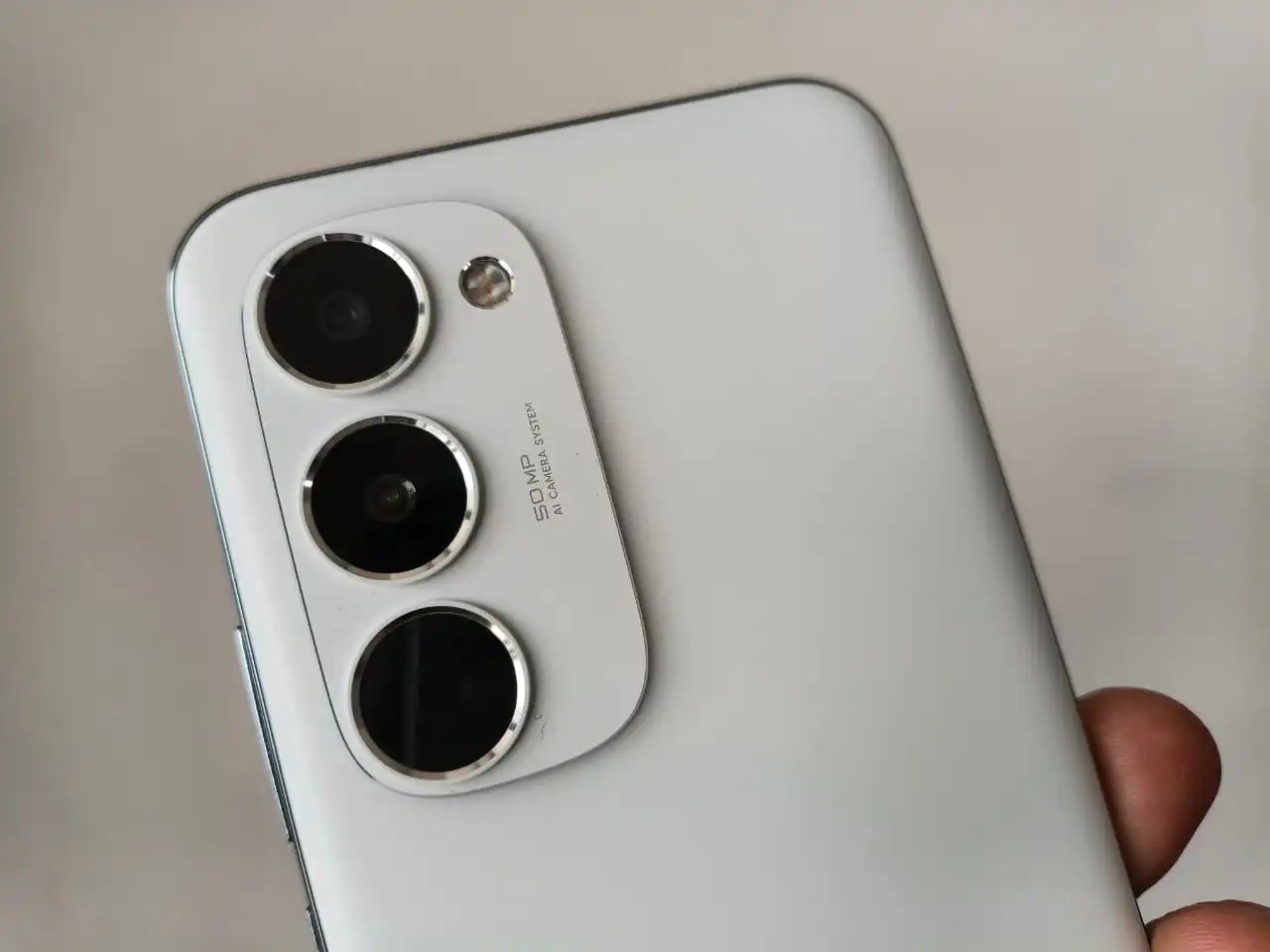
Tecno’s Spark 40 Pro+, launched in July 2025 and priced between KES 24,300 and KES 27,500 depending on storage, leads on display and charging speed.
It packs a 6.78-inch curved AMOLED screen at 144Hz with 4500 nits peak brightness, a 5200mAh battery with 45W wired and 30W wireless charging, and an IP64 rating.
It is a 4G-only device, which keeps costs down, and its MediaTek Helio G200 chipset handles mid-range gaming titles like PUBG Mobile and Mobile Legends at medium settings without difficulty.
In our review of the Spark 40 Pro+, we found the AMOLED display bright and smooth in daily use, even though the panel is capped at 120Hz in practice rather than the advertised 144Hz, and the single functional 50MP camera lacks optical stabilisation despite the triple-lens look of the camera island.
Tecno’s two-year security update commitment, with no promised major OS upgrades, was flagged as the phone’s clearest drawback, though the review still rated it a worthwhile pick under KES 23,000 for buyers who do not need long-term software support.
Infinix Hot 60 Pro+

Infinix’s Hot 60 Pro+, also launched in July 2025 and priced between KES 23,000 and KES 27,500, is the lightest and slimmest phone on this list at 155g and 5.95mm thick.
It shares Tecno’s Helio G200 chipset and a similarly specced 6.78-inch AMOLED display at 144Hz, backed by a 5160mAh battery with 45W charging. Infinix rates it IP65 for dust and water resistance, a step up from Tecno’s IP64, and commits to three years of Android updates and five years of security patches, ahead of what Infinix has historically offered.
Our review of the Hot 60 Pro+ praised its slim, light build and matched the Spark 40 Pro+ on display quality and everyday performance, while noting occasional accidental touches caused by the curved screen edges and a single working rear camera that struggles in low light.
Infinix’s longer update commitment was the deciding factor in the review’s positive outlook on long-term ownership, though a later update to the review flagged early AMOLED burn-in on the test unit, worth watching for buyers considering the phone.
Which one should you buy
Across this bracket, the clearest split is between Samsung’s two models, which trade some display and charging specs for six years of guaranteed software support, and the Xiaomi, Tecno, and Infinix options, which generally offer faster charging, higher refresh rates, or larger batteries at the same price but shorter update commitments.
Buyers should also confirm they are ordering the exact variant reviewed, since RAM and storage configurations affect price by several thousand shillings across all six models, and should buy only from sellers offering a manufacturer warranty given how often counterfeit units surface in this price segment locally.


Leave a Reply